AI Native Content Designer/Content Engineer
I chart simple paths through complex platforms, reducing time to deployment from days to minutes by shipping production code.
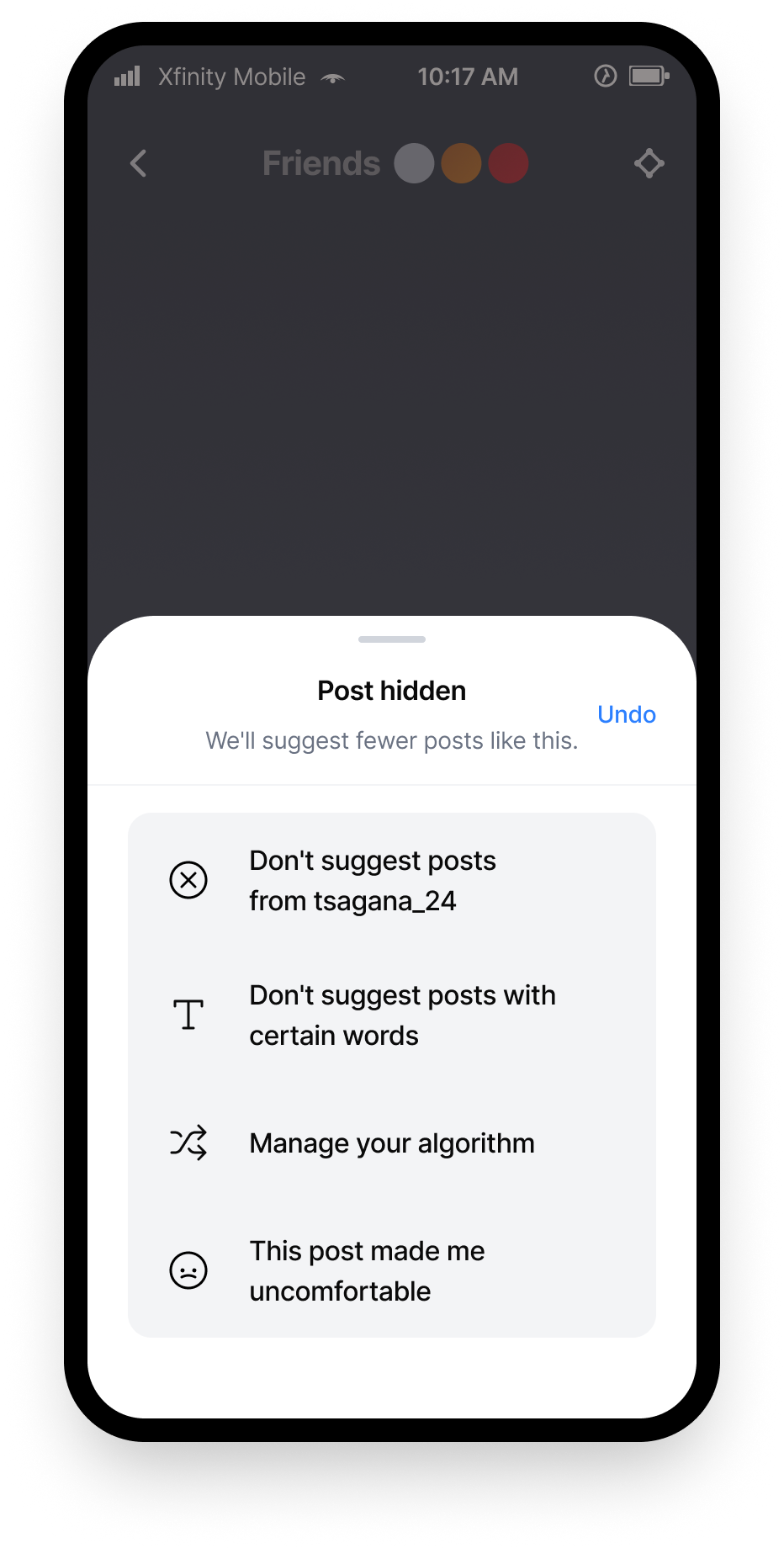
Using AI to surface nuanced feedback on Instagram.
Clarifying funding at Wells Fargo.
Simplifying Change Management across the enterprise at Comcast.
“I was impressed by Kathleen’s ability to negotiate with and influence stakeholders. She consistently helped keep attention on delivering value for users, found ways to reconcile differences and kept relationships intact…I would jump at the chance to work with her again.”
. - Katie Antheil Boyd, Manager, Instagram
Instagram | Account Safety | Skip CoT Reels Project
Content strategy and content engineering on a cross-functional AI experiment
Using AI to improve our algorithm
Problem
When people tell us they’re not interested in a reel, we ask them why so we can show them things they’ll like better, but the options we give them are generic. We’re not using the information we collect on the backend to personalize the feedback we receive in the “Not interested” flow.
Solution
Work cross functionally to test whether the latest LLMs can use the information we collect to surface nuanced feedback.
Process
Create language frames, based in UXR, for dynamically generated questions.
Craft taxonomies to test whether specific categories are needed.
Test 2 scenarios - LLMs pulling responses from categories and LLMs creating their own options based on specific user behavior - to determine the best way to surface nuanced feedback that has a positive impact on recommendations.
Note
Because the test is confidential, I can’t share results or updated mocks, but the process gave me a good sense of the potential of LLMs to create a new experience on Instagram that’s much more tailored to the user and much more personal.
Kathleen continually and adeptly balanced product and user needs in order to craft clear, accurate content — while incorporating feedback from our diverse internal functions. It was a pleasure to work alongside her as she unblocked work with grace and confidence
- Sarah Dorsey, Skip Manager, Instagram
Comcast | Change Management
Content design and strategy
Saving billions by redesigning Change Management at Comcast
Problem
The Change Management process at Comcast was so confusing that, when an outage occurred, it was difficult to identify which change in code had caused it. The longer it took to roll back the code, the more money the company lost.
Solution
A complete redesign of the Change Management process on an enterprise application software platform used across the enterprise and based in ServiceNow.
Outcome
40% more changes using automation, which led to fewer mistakes, quicker code roll-backs, shorter outages and money saved.
Process
Original homepage
A lack of engagement
This homepage didn’t engage users by providing them with a clear path into Change Management, so many submitted Change tickets manually, increasing human error.
Others created personal dashboards to simplify submitting tickets. The large number of personalized dashboards greatly impacted load time across the platform.
My goal was to create a page that enabled all users, regardless of experience, to simply and easily navigate a complex, automated Change Management system from one place, decreasing load time, reducing human error and saving revenue.
A specific space, dedicated to Change Management
After redesigning the content on the homepage, I created a centralized hub for Change Management, which can be reached through the Change Management tile.
Each tile leads to an updated form or process, taking the guesswork out of creating and maintaining changes.
Outcome: An intuitive approach to automated ticketing that saves revenue by increasing the number of Change tickets filed using automation, reducing human error and enabling code to be rolled back quickly in the case of an outage.
First re-design
Working towards the perspective of the user
While Change Management was the focus of the redesign, the homepage needed to serve many purposes. In this version, I’ve organized tasks by tiles, labeling each with an action verb to invite the user into the tool.
While this page helps users to find their use case and complete their tasks, the links divide tasks into teams, which adds an extra step.
I found from user research that the tasks offered in these tiles weren’t the ones that users needed most on a homepage.
Goal: Create a simplified experience in which users can easily identify their use cases and complete their tasks.
Final redesign | homepage
A consolidated approach
After conducting user research and performing an extensive information audit, I reorganized the information provided on this page so that it prioritized user needs, while still serving the needs of Product and Engineering.
Change, Incident and Problem Management tiles lead to a hub for each, so that users can easily manage them using automation.
Outcome: A simpler system of navigation that lets users chart a specific path through a complex platform, one that requires no unnecessary steps.
Change Management hub
One of the many things that saddened me when I left Comcast was losing Kathleen’s perspective on imbuing technical solutions with a human voice that encourages and supports the user to achieve their goals. I certainly hope to have an opportunity to have her join my team again
-Travis Parchman, Manager, Comcast
Wells Fargo | Funding a new account
Problem
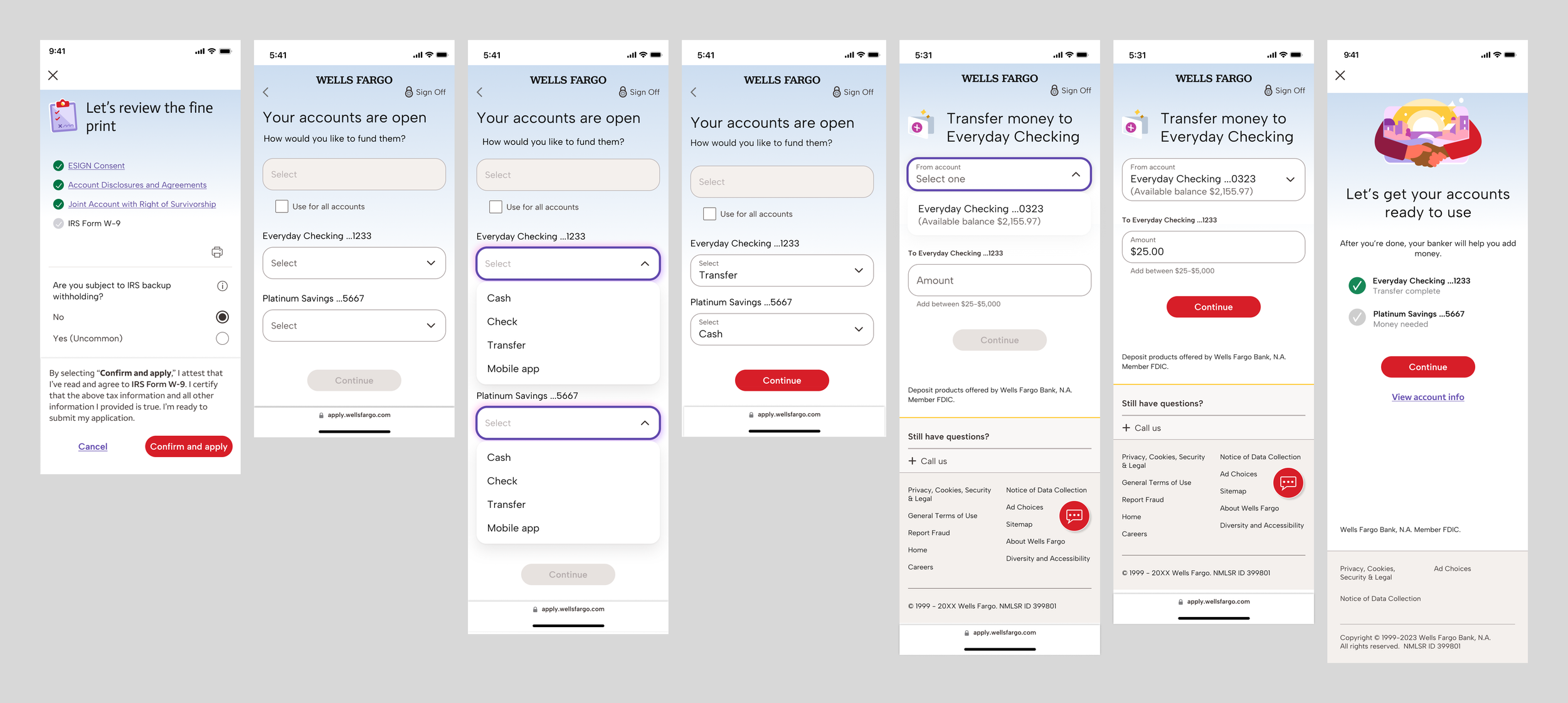
When a user opens a bank account in person, most of the process is online, but, when they fund the account, they often use cash or a check, which means they need to leave the online process and make a deposit at the teller window. This combination of the digital and physical world leads to an awkward transition in the flow. Here’s the process:
After the account is open, we ask users to fund it. If they fund via online transfer, we continue with funding. If they choose to fund with cash or check, we interrupt funding and ask them to create a PIN for their debit card and choose how to receive their statements. We do this because if we take them to the teller window, the app will time out, and it will be difficult to ask them to sign back into the app to continue with the digital flow. We interrupt funding, within the flow, so that we don’t have to interrupt the entire digital experience with a physical one, but interruptions are never easy, and an abrupt change in subject can be confusing to the user.
Solution
Update the language in the flow so that it acknowledges the choice the user has made and provides clear next steps.
Outcome
A change that was implemented across the in-branch experience that contributed to a 7-minute reduction in time to completion, due to the fact that bankers didn’t have to stop and explain the process.
Current flow
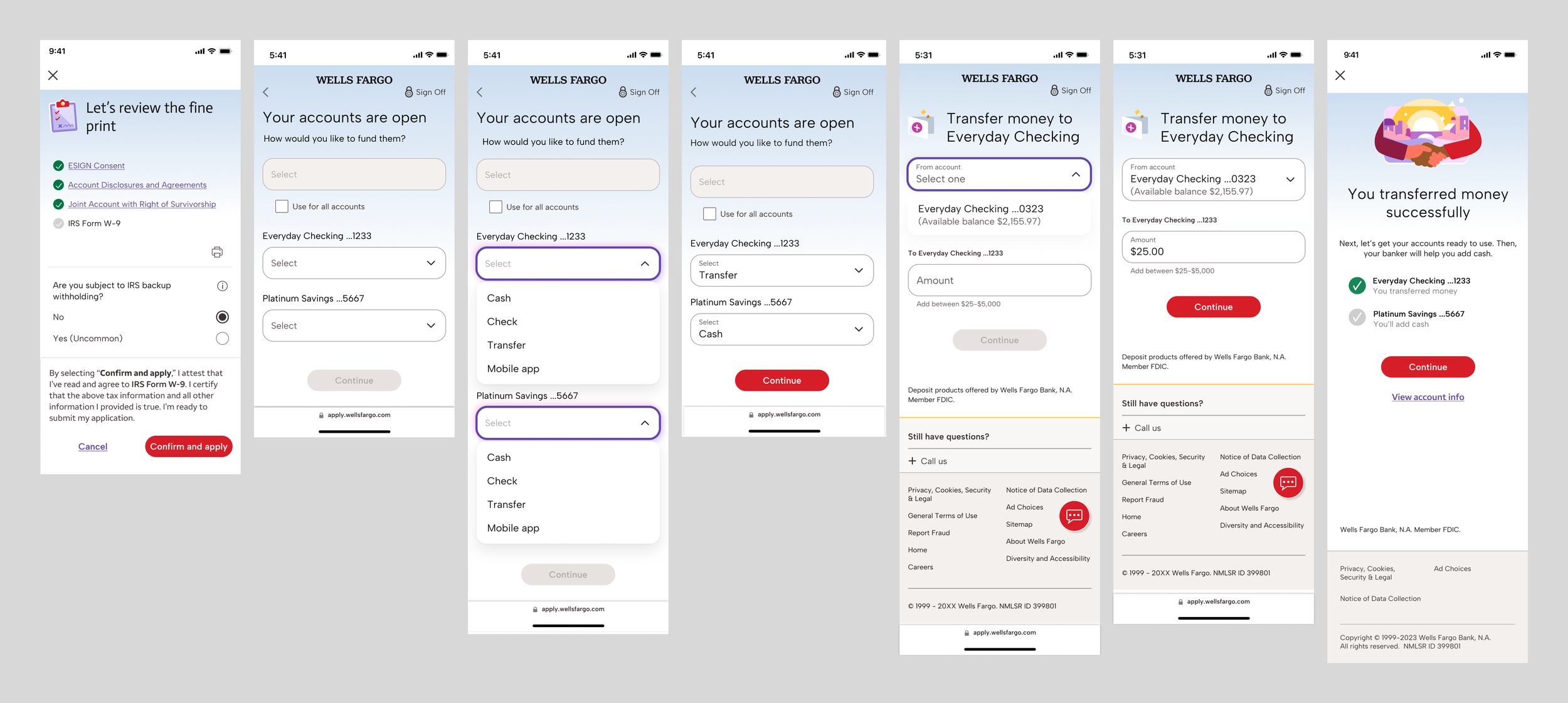
In final screen, we change the subject abruptly. The user has chosen to transfer money for one new account and to add money in the branch for the other. In the final screen of the original flow, we don’t acknowledge the transfer, which could confuse the user and make them feel as if they aren’t being heard.
New flow
The new headline acknowledges the choice the user made on the previous screen and creates two steps, so the user knows what to expect.
You joined the team in a difficult season and you are doing an amazing job. The descriptions you provide in PXFN are stellar, and speak to your communication skills and preparation. Thank you for the professionalism and high level work you bring to this space, it is not only needed but supports the business to move forward faster and better.
- Chloe Burke, Public Policy Manager, Instagram
Instagram | Account Safety
Content strategy and design
Using choice to convey legitimacy
Problem
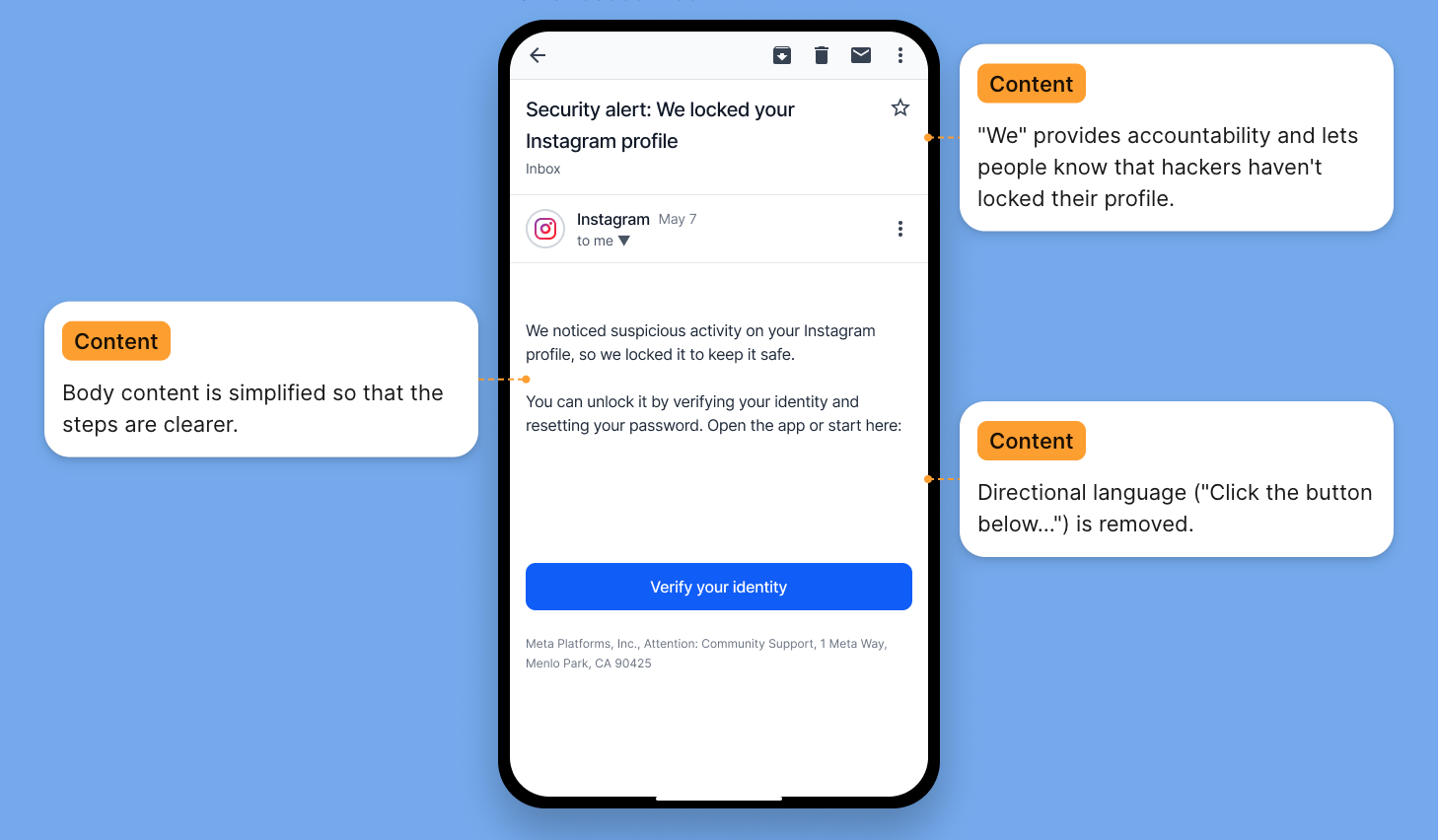
When Instagram suspects that a profile was hacked, they lock it. In order to unlock it, users need to verify their identity and change their password. We initiate this process via a link in the email, but users are hesitant to click on the link, because they worry that the email itself is a scam.
Solution
Provide an alternate means of initiating the profile recovery flow in the email.
Outcome
A process that offers users a choice of recovery, rebuilding confidence and during a high-stress moment on a high-stakes surface.
I was in awe of how Kathleen was able to navigate our workstream's complex and highly scrutinized regulatory requirements and reviews despite having just joined the company. The work she did was recognized company-wide by leadership with her content specifically being called out as one of the big improvements. - Stephanie Eddy, content designer, Facebook
Comcast - Component Library
Content strategy and design
Reducing time to deployment by ~1.25 days
Problem
Reliability Engineering is a large org within Comcast. They had never hired a content designer, and they had no universal content processes. The product teams and engineers wrote user interface messaging themselves, which took up too much of their time. They weren’t familiar with user experience best practices, so they missed some opportunities.
Solution
Instill consistent and efficient content processes by creating a component library that provides downloadable design and messaging blocks that can be combined into innumerable patterns, enabling engineers and product teams to easily create user interfaces, freeing up time for engineers and increasing efficiency for users.
Outcome
A reduction in time to deployment that enabled engineers to complete more updates and features per quarter, creating more efficient tools. Updated messaging across internal tools at Comcast that enabled everyone from customer support representatives to engineers to spend less time on tasks.
Process
Homepage
Clearer instructions to invite users in
After completing the first homepage, we broadened our scope. We wanted the library to be something anyone internal to Comcast could understand and use. I redid the homepage to ensure that people would have a clear understanding of what the library does, even if they didn’t have context.
An incomplete invitation to internal users
The component library is a new way to develop user interfaces on internally facing web-based applications at Comcast. The goal was to create a community of contributors, so that the library reflects design elements from across the enterprise.
The library focuses on design elements for internal users, so I created a tone that reflects Comcast’s overarching culture of community, inclusion and informal camaraderie.
Support page
Solving issues and contributing ideas
The structure of the content on this page reflects the overarching goal of the library, which is to save time for engineers and product teams while encouraging creativity and consistency.
Because users are visiting this page for different reasons, I supply the basic information and link out to specifics, so that they don’t have to sift through instructions that aren’t necessary for their use case.
Outcome: A page that offers support, encourages contribution and celebrates the internal user at Comcast.
Kathleen taught most of us why understanding the needs of the customer from a UX research perspective is paramount in delivering a solution customers love. She is first and foremost one of the most collaborative people I have ever worked with. She not only collaborated well within her team but across the large corporate landscape that is Comcast. On top of that she is a natural leader.
-Brian Carpio, Manager, Meta